Dick Gort: Science parks, AI and natural capital as opportunities for institutional investors
This interview was originally written in Dutch. This is an English translation
At a time when geopolitical tensions and new pension regulations are causing significant upheaval in the financial sector, many institutional investors are reconsidering their strategic positioning. Financial Investigator spoke to Dick Gort, CEO of a.s.r. real assets, about various areas he considers to be of interest. His message is that a clear focus when formulating and executing the investment strategy is essential to continue creating value in the long term.
By Harry Geels
There is a lot going on in the financial world at the moment: geopolitical conflicts, a new pension system, and so on. If you were to identify three major opportunities for institutional investors right now, using an out-of-the-box mindset, what would they be?
‘I would start with science parks. Ten years ago, an opportunity arose for us when universities were no longer permitted to invest commercially in property. Educational buildings and property for start-ups are usually owned by universities, but new solutions were needed for research and development property for scale-ups and corporates. The Dutch Investment Institution (NLII) was looking for an innovative company with experience in property funds and asked us to invest in this and whether we could structure it. We took on this challenge straight away. From an investment perspective, science parks are unique and non-cyclical, and have an impact on the Netherlands’ knowledge economy. Technology and innovation are, particularly given the geopolitical tensions, crucial to the strategic autonomy of the Netherlands and Europe. For investors, science parks offer stable returns with low correlation to traditional property.
Our science park fund began with TU Delft, followed by Enschede, DSM-Firmenich and then Leiden, where research into deep tech and life sciences is being conducted at various locations. Examples include quantum computing, semiconductors, AI, cleantech, medtech and biotech. We are now investing in a variety of laboratories, ‘pilot rooms’ and ‘maker spaces’ at the most attractive science parks across various locations in the Netherlands. This investment product also aligns well with the key themes or trends we have identified: health, an ageing population, nutrition, digitalisation and sustainability.
The second major opportunity concerns AI, and by that I do not necessarily mean investing in AI companies, but rather how AI assists us in the investment process. By making better use of the vast amounts of data we possess, we can make better and more efficient decisions. For instance, within our financial and portfolio processes, we are using increasingly advanced forecasting tools, including to support return forecasts and scenario analyses.
AI can also improve risk management and make policy more consistent. We expect AI to play an increasingly significant role within our organisation, always as a complement to human knowledge and expertise, not as a replacement for it. That is why we are investing heavily in it internally. Key considerations are the ‘human in the loop’ and robust governance. For investors, this translates into better-informed investment decisions and more consistent risk management.’
AI helps us make better and more efficient investment decisions, with more consistent risk management.
And the third interesting opportunity – is that, coincidentally, real assets?
‘Yes, but I’d like to be a bit more specific by first focusing on agricultural land. That’s an interesting asset class because it retains its value. In practice, alongside a modest rent, the inflation index is tracked, and in some years the value growth even exceeds that. We started investing in uncultivated land 130 years ago to cultivate it into agricultural land, at the time to facilitate forestry for industry. Now, the more than 45,000 hectares of agricultural land in our portfolio are largely used for growing food. In this way, together with our investors, we contribute to food security in the Netherlands and to making the agricultural sector more sustainable. And what is particularly special is that the very first plots of land are still part of our portfolio. We employ our own stewards to manage our agricultural land and estates.
We are one of the few parties that have remained active in this field over time. Many institutional investors have divested from agricultural land in recent decades: too much operational hassle. These days, incidentally, we talk about ‘natural capital’. Due to its unique value trajectory, it is a wonderful diversifier within the portfolio. We are the only Dutch private provider of land on this scale. Initially solely as an investment for our parent company, the insurer a.s.r., and nowadays jointly with other institutional investors such as ING Pension Fund, BPL Pension and DELA.
We have also set up a fund to further support the energy transition in the Netherlands by investing in wind farms, solar parks and large-scale battery storage. The fund currently focuses primarily on onshore wind energy, but we have also recently invested in battery storage at our Strekdammen wind farm. This battery stores energy when there is plenty of wind and feeds electricity back into the grid at times of scarcity, thereby better matching supply and demand and helping to keep the electricity grid in balance. It is worth noting that many of our investments are still eligible for subsidies under the Sustainable Energy Production Incentive Scheme, or SDE subsidies for short, meaning that for some of them we are guaranteed a minimum price by the government for years to come.’
What advantages does the focus on the Dutch market offer?
‘The Netherlands is one of the most stable markets for real assets in the world, for example due to its relatively high economic growth, and for agriculture, partly thanks to our location in the deltas of several major rivers. Furthermore, we are a multicultural country with a sound financial infrastructure, excellent universities, a highly educated population and advanced digital infrastructure. Our major cities, in particular, are performing relatively well compared to other cities worldwide. They rank highly in all sorts of rankings, whether these measure relative competitiveness, affordability or the social living environment.
I haven’t yet mentioned our Prime Retail retail fund. This is a fund with unique assets in the very best retail locations in the Netherlands’ key shopping cities. Not just ‘high street’, but also ‘convenience’ with district centres and supermarkets. I am convinced that our retail fund will continue to perform very well, with a high direct yield, negligible vacancy rates, rising valuations and, consequently, an excellent IRR.
With our office fund, we focus on the key Central Business Districts in the five largest cities in the Netherlands, purchasing only offices located no further than 750 metres from an intercity station. We refer to these as mobility hubs that have become distinctive economic and social ecosystems. We are therefore very strict in our selection. We are convinced that these hubs will remain attractive to large companies for the very long term. This also implies that, in our view, offices outside these hubs will become less attractive and therefore riskier in the coming years. With our strategy, focused on these mobility hubs, we clearly chose a winning strategy when we established our Mobility Office fund.
Technology and innovation are crucial to the strategic autonomy of the Netherlands and Europe.
We also have a clear strategy for all real assets funds. Each year, we look three years ahead for each fund. We then take the latest developments into account and assess whether these will have a lasting impact on the relevant market, thereby continuously refining our focus. Although the Netherlands is a stable market, we are cautious about leverage: preferably zero. In some funds, we can lend up to a maximum of 30%. But in most cases, we are much lower or even at zero. This caution suits investors who value capital preservation and stable returns.’
How has your organisation developed in recent years?
‘A few years ago, we took the step of being able to assist any institutional investor wishing to invest in property in any way. This can be done through advice, selection, implementation and monitoring of indirect property funds in Europe, America or Asia Pacific via our team at a.s.r. real assets investment partners. Another option is to invest through us in ‘separate mandates’. And, of course, it is also possible to invest in our own Dutch property funds. This allows investors to choose exactly which form of exposure and governance suits them best. I am convinced that, thanks to the platform we have built up, we can successfully offer and deliver our comprehensive range of services.
If we look back a little further, we see an interesting development: from initially investing solely for our parent company, to Dutch institutional investors, and in recent years increasingly for international investors. This is recognition that foreign investors see the strength of both the Dutch market and us as a service provider. Many clients appreciate that we have ‘skin in the game’ in all our funds. ‘Walk the talk’, as the English say. Our real assets platform now manages over €20 billion in investments.
In addition, ASR Real Assets Area Development forms part of our platform. As an area developer, we have a pipeline of 13,000 homes. We thereby also position ourselves as a party that can make a positive contribution to the tight housing market in the Netherlands, naturally through sustainable housing construction.’
Agricultural land retains its value and is an excellent diversifier within the portfolio.
What do you aim to achieve in the coming years?
‘We have a clear ambition to further grow our real assets platform, both through our funds and via separate mandates, which we view as growth markets. We also see further growth opportunities for our area developer and our fiduciary organisation. Europe’s reorientation towards its own continent – driven by geopolitical developments and the need for greater strategic autonomy – will likely help in this regard.
Ultimately, our real assets platform is all about freedom of choice: investors can opt for standard solutions via our funds, but also for bespoke solutions that tailor exposure, governance and risk profile to their own long-term objectives. We are keen to offer these various options and aim to be the partner that best suits the investor’s needs.’
|
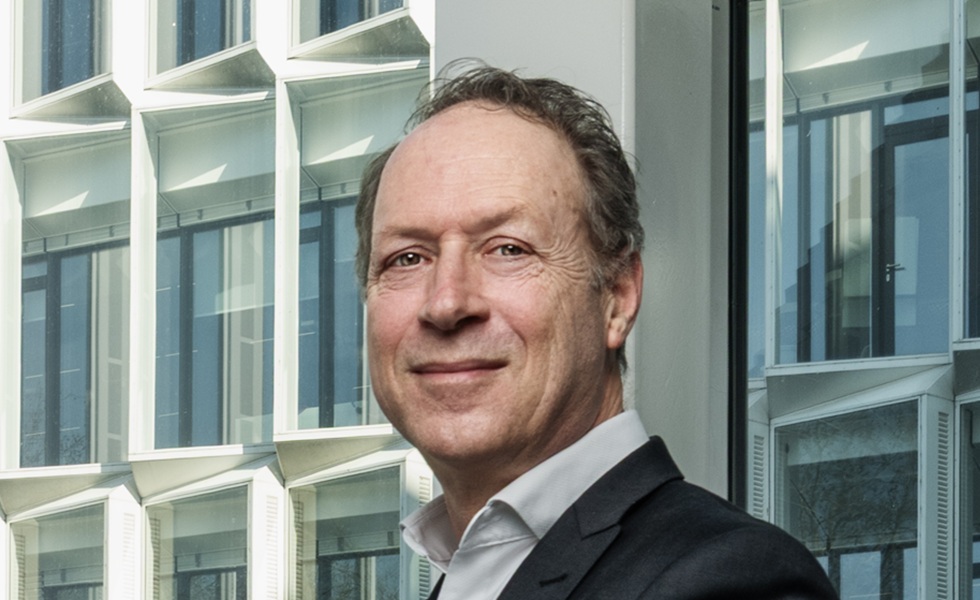
Dick Gort Dick Gort has been CEO of a.s.r. real assets since 2007. Before joining the company, he was Head of Offices and Industrial Properties at Syntrus Achmea Real Estate & Finance. Prior to that, he worked at MN, where he was responsible for the Dutch office portfolio and for the acquisition of retail and residential property. Gort studied Business Administration at Erasmus University Rotterdam and obtained a Master’s degree in Real Estate from the University of Amsterdam. |
Read the interview in Financial Investigator magazine