
Jeffrey Winters: We are living in the most unequal times ever
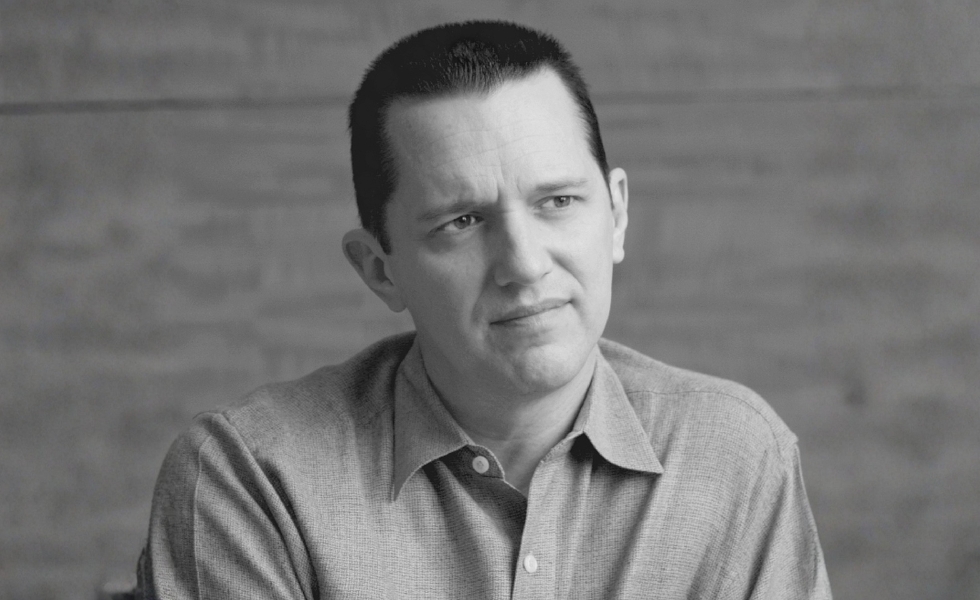
The rich of this world have never had it better than they do right now. Aided by an army of tax specialists, asset managers, legal experts, and, most of all, politicians, they know how to hide their wealth better than ever. The result is a level of inequality that is unprecedented in modern history.
By Joost van Mierlo
That is the opinion of American political scientist Jeffrey Winters. He has been studying the activities of contemporary oligarchs for over twenty years, culminating in the publication of his book ‘Oligarchy’ in 2011. According to him, the power of oligarchs has grown exponentially since then, resulting in ‘the most unequal society’ in history.
Oligarchs achieve this by hollowing out democracy itself, Winters argues. People in Western countries have the impression that they live in free societies, that they can vote for whomever they choose and protest whatever they oppose. But this freedom exists only as long as it does not harm the interests of oligarchs, the richest of the rich.
For a long time, the term oligarch was associated with Russia or similar dictatorships. According to Winters, that is no longer the case. In the US and European democracies, too, the power, influence, and also the wealth of a select group of immensely wealthy individuals is growing.
In his new book, ‘The Blind Spot’, Winters makes clear how contemporary democracy is being undermined by oligarchs. He recently visited London where he spoke with a select group of journalists.
What exactly do you mean when you talk about oligarchs?
‘Oligarchs are a group of wealthy individuals whose primary concern is to maintain their wealth and preferably expand it. I say individuals, but they are mostly men. I do not think there is a category of people as overwhelmingly male as these contemporary oligarchs. The only exception I can think of is Catholic priests. It concerns people who primarily want to protect their wealth from the tax authorities. That is, of course, not a new story. Oligarchs have been trying to do that for thousands of years. The remarkable thing, however, is that they have never succeeded as well as they do today. And this despite the fact that we officially live in a democracy, where the interests of the majority should ensure that the elite, a naturally small group, is kept in check.
My contention is that the opposite is happening. When it comes to political decisions that harm the interests of oligarchs, they ensure that those decisions are steered in a direction favourable to them.
How do they do that?
‘With money. The most striking example is probably the American presidential election. US President Donald Trump’s campaign raised no less than one and a half billion dollars. A third of that amount, a staggering five hundred million dollars, was donated by just three individuals.
Oligarchs have never succeeded as well at protecting their wealth from the tax authorities as they do today
Tesla’s CEO Elon Musk is, of course, the most prominent donor, but nearly two hundred million dollars were donated by Timothy Mellon, a name most people have never heard of. He is a scion of the Mellon dynasty, whose fortune originated with Thomas Mellon, known for Mellon Bank, among other things. Timothy Mellon spends much more money on politics than on charity. And the money he spends on politics is aimed at protecting his wealth.’
Isn’t that something that has always existed?
‘Yes, but the contemporary elite has never been as successful at it as they are today. In many Western countries, a very rigid tax structure was put in place in the period after the Second World War. A tax rate of more than 90% had to be paid on the highest portion of income, even in the US.
That has gradually decreased over the years, meaning that a top rate of less than 50% often applies today. Not that today’s oligarchs pay that much. The average American pays about 20% to 30% in income tax. Oligarchs pay 1% to 3%. Not only have they ensured that the tax burden has been significantly reduced, they are also better able than ever to hide this wealth.’
How do they do that?
‘A government can only tax income that is visible. Today’s oligarchs are protected by what I call the ‘Wealth Defense Industry’: an army of tax specialists, asset managers, and legal experts. They develop structures that make it virtually impossible to determine which individual or which company owns what.
This involves so-called Large Partnerships, in which a complex network of trusts, companies, and individuals is created. Less than ten years ago, an average ‘Large Partnership’ consisted of 56.000 different partners. That is complicated enough already. Nowadays, such a Large Partnership consists of no less than 500.000 partners. It involves a ‘hall of mirrors’ where nothing is what it seems. And it is all legally covered.’
You claim that today’s society is the most unequal in history. What do you base that on?
‘Let’s make a comparison between the incomes of the wealthiest people in the Roman Empire and the incomes of present-day oligarchs. In Rome, the ratio of the Senators, the wealthiest people of Rome, and the average citizen was 16.000 to 1. In the US, the current ratio between the wealthiest 400 Americans and the average citizen is 140.000 to 1.
I understand that all sorts of things have changed since then. There is no longer slavery, and the role of women is not comparable, but when it comes to economic inequality – and that is what I am talking about – nothing compares to the current period. And this inequality has increased enormously over the past fifty years.’
Oligarchs are richer than ever. But the composition of this group is also changing significantly. Today’s oligarchs are totally different from those of, say, twenty years ago. Is that relevant?
‘The group is indeed totally different, and without a doubt, the group will look completely different again in twenty years. That is the reason why I do not wish to focus on individuals, but on the structures they create to protect their power and their wealth.
When it comes to political decisions that harm the interests of oligarchs, they ensure that those decisions are steered in a direction favourable to them
It is not only the faces of Jeff Bezos, Elon Musk, and Mark Zuckerberg that matter, although most people will recognize them and it is very clear how they use their power and influence. It also concerns people whom most people would not recognize if they encountered them on the street. Take the representatives of the Mars family. Everyone knows Milky Way and Snickers, but it is much less clear who is actually behind them.
For years, the Mars family funded the fight against the American ‘estate tax,’ a type of inheritance tax. It was a very successful lobby. One of the ways they did this was by dubbing the inheritance tax a ‘death tax.’ This caused a great sense of indignation among Americans regarding this ‘unjust tax.’ After all, you already had to pay so much tax during your lifetime, and then again after you were dead. The lobby ensured that the ‘estate tax’ disappeared completely. That is, of course, a huge success for the oligarchs as a group.’
The cuts at the US Internal Revenue Service under Trump fit this picture, don’t they?
‘Exactly. It is a similar story to the ‘death tax’. Most Americans think it is wonderful that cuts are being made at the tax service. However, they do not realize that it is counterproductive. After all, the income tax of the average citizen is determined by computers. Based on data from employers and banks, an estimate is made of the required tax rate. No human intervention is involved.
The people who were laid off from the tax service almost all focused on the complex and virtually impenetrable information provided by oligarchs. With the cuts that have been implemented, it is becoming even more difficult to determine exactly how much tax oligarchs owe. The downside is that, as a result, more attention is being paid to potential tax fraud by the average American.’
Historically, there have been periods when the power of oligarchs was undermined, such as after the First World War. Is the fact that inequality is rising not the result of the fact that there has not been a major war for over eighty years?
‘It is true that oligarchs are vulnerable during periods of major conflict. During the period of the two world wars and the depression in between, the position of oligarchs was severely eroded. I mentioned earlier the highest tax rate of over 90%. Naturally, oligarchs were not happy about that. But that was not the only measure taken. For instance, numerous cartels of railways, banks, and oil companies were broken up, something that also came at the expense of the oligarchs.’
The Great Financial Crisis of 2008/2009 was also a major shock. Yet, if we follow your analysis, it did not have major consequences.
‘That is correct. I call this the ‘Politics of Preparation’ in my book. After the Second World War, the time was ripe to crack down hard on oligarchs. There was a broad sense of mutual cohesion, and everyone had to contribute to the recovery to the best of their ability. That sense of urgency was absent during the Great Financial Crisis. Instead of cracking down hard on them, they were actually generously compensated by the way the crisis was handled.
The average American pays about 20% to 30% in income tax. Oligarchs pay 1% to 3%
However, it can also be done differently. The best example of this is after the terrorist attacks of 9/11. Within a few weeks, measures were implemented requiring banks to report suspicious transactions. The legislation for this was actually ready. It had been prepared with a view to making public the transactions of primarily foreign oligarchs. However, it was used to uncover transactions by terrorists.
It does, however, indicate how quickly things can change, provided the proper groundwork has been done. The so-called SAR, the Suspicious Accounting Report regulations required banks to identify and report suspicious transactions. Otherwise, they would face fines. It was legislation that oligarchs certainly did not want.’
Pension funds are a powerful player in capital markets. Can they not limit the influence of oligarchs?
‘Of course, pension funds are powerful, but they do not use politics to protect their personal wealth, as is the case with oligarchs. Pension funds are simply not individuals. They are better compared to sovereign wealth funds, which are also completely different from oligarchs.’
|
Jeffrey Winters Jeffrey Winters obtained his PhD from Yale University in 1991 with a study on Southeast Asia, with an emphasis on capital flows and political power in Indonesia. He’s a Professor of Political Sciences at Northwestern University in Illinois. In recent years, his attention has focused primarily on the study of oligarchs. In 2011, Winters published his book ‘Oligarchy’. This year, ‘The Blind Spot’ was published. |
Read the interview in the digital magazine