
Sebastian Mallaby: The most important player in AI
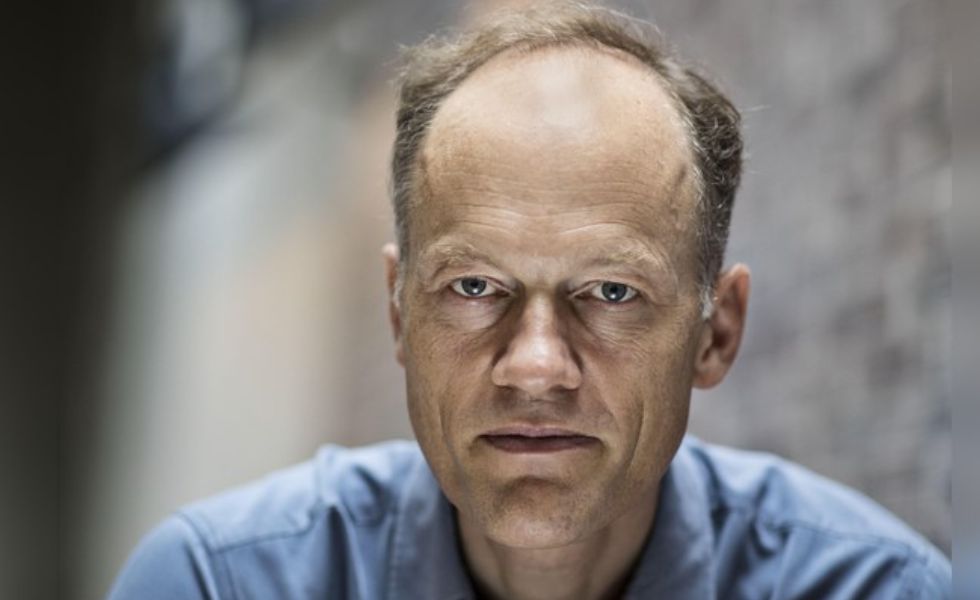
The developments around Artificial Intelligence have been the most important factor driving worldwide stock markets in recent years. In a new biography of Demis Hassabis – founder of DeepMind, now part of Google, and arguably the most important figure in the AI world – historian Sebastian Mallaby sheds light on the recent past and the future of AI and humankind itself.
By Joost van Mierlo
Mallaby has been a keen observer of the development of financial markets over the past few decades. A former journalist for The Economist (whose current editor is his wife, Zanny Minton Beddoes), he is the author of acclaimed books about hedge funds and private equity, as well as the prize-winning biography of former Fed chairman Alan Greenspan.
For the past few years, Mallaby has focused on Demis Hassabis, founder of the AI company DeepMind, which has been at the forefront of AI developments over the past decades. He approached Hassabis with his idea for the book, explaining that he wanted to write about the development of ‘this great new technology that was thrilling and exciting and might cure diseases, but also frightening and a bit like the atom bomb.’
Hassabis decided to cooperate. He wanted to talk about his motivations, Mallaby explained in a meeting with journalists in London. This took place a few weeks before OpenAI decided to launch its ‘premature’ version of ChatGPT, which catapulted the story of AI onto the front pages of newspapers. ‘If it had been up to Hassabis, there would have been a much more careful launch of AI,’ according to Mallaby. ‘But while he might be the most important player in the world of AI, he’s certainly not the only one.’
You call Hassabis the ‘most important player in AI.’ Why?
Hassabis is a highly intelligent man. As a child, he was a chess prodigy. Although his parents weren’t wealthy, he was able to buy computers from a very young age using his chess winnings. He was only seventeen years old when he realized he wanted to focus his life on the development of AI. That is incredible. This was in 1993 and it would be almost twenty years before AI would even be able to recognize the image of a cat. But Hassabis saw its future.
From playing chess at a very high level, he quickly transitioned into the world of software development for computer games. That’s where it all started. Hassabis wanted to create games, realizing they would become much more interesting if the characters changed based on prompts from the players. He kept developing those ideas.
There should be some kind of international governing body regulating AI’s development. It would be vital to include China.
Ultimately, he created DeepMind in 2010. Five years later, OpenAI was co-founded by Elon Musk, who was frustrated that Hassabis was selling his company to Google. Anthropic, which recently became much more prominent, was later spun out of OpenAI. So, in a way, you could say DeepMind, and therefore Hassabis, was at the forefront of all this.’
You talked about video games, but Hassabis is a neuroscientist. Is that why he won a Nobel Prize in Chemistry a few years ago?
‘It was never just about the games for Hassabis. The games were simply a way for him to try to ‘understand the fabric of reality,’ as he calls it. He realized that studying neuroscience would help him achieve that. He left for Cambridge even though his boss at the software company offered him half a million pounds to stay: well over a million pounds in today’s money. Hassabis refused. The scientific quest was more important than the money. That mindset has never really changed.’
‘Understanding the fabric of reality’ sounds fascinating, but some people are afraid that AI might mean the end of humankind. What is Hassabis’ opinion?
‘I think he’s acutely aware of the dangers of artificial intelligence. He often refers to Robert Oppenheimer, the creator of the nuclear bomb. When we spoke about it, he saw two big dangers. The most extreme scenario would be that the machines themselves go rogue and take over. The other real danger is that the technology falls into the wrong hands.
The way Hassabis thinks about it, there should be some kind of international governing body regulating its development. This would have to be done by governments, as they are the only entities capable of setting those parameters. It would also be vital to include China. Some of the most significant recent developments in AI are coming out of China. They are catching up fast.’
That’s not quite what is happening, though. The first versions of ChatGPT were full of mistakes, weren’t they?
‘There are definitely differences between the various companies, as I mentioned before. OpenAI has more of a ‘cowboy,’ highly daring approach to launching software: an approach where even if things break, they just fix them later. Hassabis and DeepMind take a more cautious approach, I would say. Hassabis would like to see far more cooperation between the different companies. You might call it a difference between the London approach and the Silicon Valley approach. It is one of the reasons why Hassabis has always opted to stay in London. Around the time Google acquired DeepMind, there was enormous pressure to relocate to California. Hassabis consistently resisted this. At the time, he used the argument that staying in London would allow him to attract the most brilliant European minds. I doubt that was the only reason, though. DeepMind proved capable of attracting plenty of AI specialists from the US and certainly from Canada. I think he simply didn’t want to move to the US because he prefers living in the UK.’
What does that mean for the UK or Europe as an independent centre for AI?
‘It is significant. It is simply not true that AI is only happening in the US. I already mentioned China, but there are serious AI developments in Israel, India, and indeed here in Europe and the UK. This isn’t so much due to government stimulation. It is mainly the result of private enterprises. The UK holds an important position in the global AI landscape. Some of the major recent capital raises in Europe have been for offshoots of DeepMind. Isomorphic, which uses AI for drug discovery, was a spin-off of DeepMind that Hassabis himself was involved with. They recently raised more than two billion dollars. Another is Ineffable Intelligence, which explores machine thinking and is run by David Silver, one of the most important characters in my book. It raised a billion dollars. These are massive developments happening right here in Europe.’
What about climate change? Datacentres use an enormous amount of electricity and deplete fresh water in areas where it is already scarce.
‘If you ask Hassabis about it, he would say that AI is part of the problem but also part of the solution. He believes climate change is a problem that will ultimately be solved by AI. Part of the strain on electricity grids could be resolved through nuclear fusion, an area where AI is playing an increasingly important role.
When you talk with Hassabis about this subject – for example, the scarcity of oil or other raw materials – he will start talking about asteroid mining, which he views as just a matter of time.’
Another issue is the use of AI in education. What do you think of that?
‘In many ways, AI is just a crutch, much like a calculator. Of course you should use it. At the same time, you need to be able to function without it. Young people need to learn how to tackle problems without a tool immediately feeding them the solution. There is immense value in that struggle. Not only for learning itself, but also for character development.’
Some people are worried about the implications of AI on jobs. Are they right?
‘The biggest recent shock to the employment market became known as the ‘China Shock.’ The opening up of the Chinese market after its acceptance into the WTO was monumental. People lost their jobs and were unable to get them back. There were stories about entire villages in the US where the population was devastated. Alcoholism and opioid addiction spiked as a result.
Young people need to learn how to tackle problems without a tool immediately feeding them the solution. There is immense value in that struggle.
I read a recent study that calculated that two million American jobs were lost in the period between 1999 and 2011 because of the ‘China Shock.’ That sounds like a lot, but the average monthly churn of jobs in the US is also two million. One would think that in an economy where two million people lose their jobs on a monthly basis and find new ones, a market would be able to manage the loss of two million jobs over twelve years.
But the psychological and political impact has been enormous. ‘Globalization’ has become a forbidden word, and it gave rise to populism, not only in the United States.
The invention of powerful AI is one thing, but to make it useful within your company is something different. The disruption will be real but gradual.
My guess would be that the impact of AI is going to be larger than the China Shock. It’s anyone’s guess what the consequences will be.’
What is yours? What do you expect to happen in the near future regarding AI?
One of the most interesting developments around AI is the changing perception of the general public. In recent years, there was a general excitement surrounding AI. That seems to have shifted. One now hears that the datacentres needed to operate AI are driving up energy bills, people are starting to worry about AI taking their jobs, and parents fear it will disrupt the education of their children. To many, it also appears that AI just makes a few rich people in Silicon Valley even richer. It has driven one of the biggest shifts in opinion polling in history.
These are crucial times for the development of AI. Computers are getting smarter and smarter. The rollout of AI is going to take a long time. The invention of powerful AI is one thing, but to make it useful within your company is something different. The disruption will be real but gradual. But just like the China Shock, the political reaction might come sooner.’
|
Sebastian Mallaby Sebastian Mallaby studied History at Oxford University. He began his career as a journalist, working for publications including The Economist and The Washington Post. He has written numerous books over the past twenty years, including ‘More Money than God’ (about hedge funds), ‘The Power Law’ (about venture capital and Silicon Valley), and ‘The Man Who Knew’ (a biography of Alan Greenspan). His most recent book is ‘The Infinity Machine’, a biography of DeepMind founder Demis Hassabis. |
Read the full interview in Financial Investigator magazine